

7. Avoid Impairment
IMPAIRMENT FAST FACTS
- Avoid exposure to substances that decrease alertness or arousability during pregnancy and after birth.
- Substances include but are not limited to: Tobacco smoke and nicotine (including vapes), alcohol, marijuana, sedating medications and supplements, and illicit drugs.
- Tobacco smoke exposure is dose dependent. The more you use the higher your baby’s risk of sleep-related death.
- Exhaustion is its own form of impairment.
Continue reading below to learn more…
Smoking & SIDS
Smoking or vaping during pregnancy is linked to adverse effects on birth weight and often contributes to preterm labor or miscarriage. Low birth weight and premature births are associated with a higher risk of sleep-related deaths in infants.
There are three ways to be exposed to smoke. Hover over or tap on each card to see more about each type.


Studies show that exposure to secondhand and even thirdhand smoke in the baby’s environment both during pregnancy and after birth increases the risk of Sudden Infant Death Syndrome (SIDS). The danger escalates significantly when a baby shares a bed with an adult who smokes, even if smoking does not occur in bed. It is best not to smoke or vape while pregnant or after birth.
Using electronic vape pens, whether for nicotine or marijuana, is hazardous during pregnancy. The chemicals in these substances can lead to preterm birth, low birth weight, or even miscarriage. Post-pregnancy, vaping indoors can release harmful chemicals that affect your baby’s development.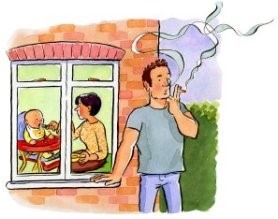
Caregivers should avoid letting other people smoke or vape around the baby. If a caregiver chooses to smoke they should do so away from the baby, ideally outdoors to avoid smoke exposure via second and third hand smoke.
After smoking, caregivers should change their shirt and wash their hands before caring for the baby. Exposure to passive smoke in the house doubles a baby’s risk of sleep-related death.
If you’re trying to quit smoking, consult your doctor for support options or visit www.quitassist.com
Impairment & Exposure: Drugs, Alcohol, & Medications
It’s important to understand the effects of caregiver substance use on the health and safety of an infant – particularly how it increases their risk of SIDS and sleep-related death. “Substance exposure” means an infant has been affected by substances like nicotine, THC, alcohol, and drugs (whether illicit, legal, prescribed, or unprescribed).
Substance exposure can take place during pregnancy or after birth, both of which have different effects on a baby.
Hover over or tap on each card to see more.


In either scenario, an infant exposed to substances is at higher risk of SIDS and suffocation. This makes it even more essential to always follow safe sleep practices for these babies, at every nap and overnight sleep. It is also critically important for caregivers who may be under the influence of substances to have a plan for safe sleep because their judgment and awareness may be impaired. This increases the risk of sleep-related injuries or fatalities for the infant(s) in their care because:
-
- Substances that impair alertness can delay a caregiver’s response to an infant in distress, and the sedative effects of these substances can prevent caregivers from waking up if the baby is in an unsafe position or environment.
- Under the influence, caregivers may experience impaired decision-making and may accidentally fall asleep with their baby on adult beds, couches, armchairs, or place their baby to sleep in other unsafe environments, increasing the risk of suffocation or entrapment.
Create a Safe Sleep Plan
If you are using, drinking, or taking medication, your plan for safe sleep should include:
- A trusted adult: Someone who can watch your baby and respond to their needs while you are impaired. Make sure that this adult is aware of safe sleep practices.
- A separate safe sleeping environment: Ensure that your baby has a separate safe sleeping environment. Babies that die while caregivers are using drugs or under the influence of alcohol most often die while surface sharing with that adult.
- A list of emergency contacts and numbers: You should have a list of emergency contacts and numbers just in case you are unable to respond to the needs of your baby and need assistance.
- Breastfeeding guidance: Consult your doctor before breastfeeding your baby after using substances, drinking, or taking medications.
Impairment & Exhaustion
 Caregiver exhaustion, or being extremely tired as a parent, can be risky for both the parent and the baby. When parents are too tired, it becomes challenging to pay close attention to the baby’s needs and create a safe sleep environment. Exhaustion can lead to unintentional mistakes, like placing the baby in an unsafe sleep position or forgetting to clear the crib of soft bedding.
Parents must prioritize getting enough rest and should share caregiving responsibilities when possible to prevent exhaustion. Taking breaks, seeking support from family and friends, and establishing a sleep routine can help parents manage fatigue and provide the best care for their babies. Adequate rest ensures the parent’s well-being and contributes to a safer sleep environment for the baby.
When you are overtired, you may find yourself becoming easily irritated or making decisions that prioritize convenience over safety. We know that when you are exhausted, following your safe sleep plan can be difficult, but don’t be afraid to ask for help or take a break when you need it. Learn more about asking for help or how to take a break safely here.